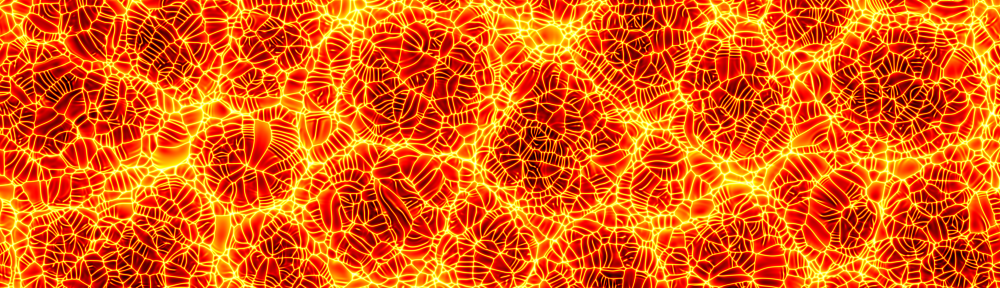
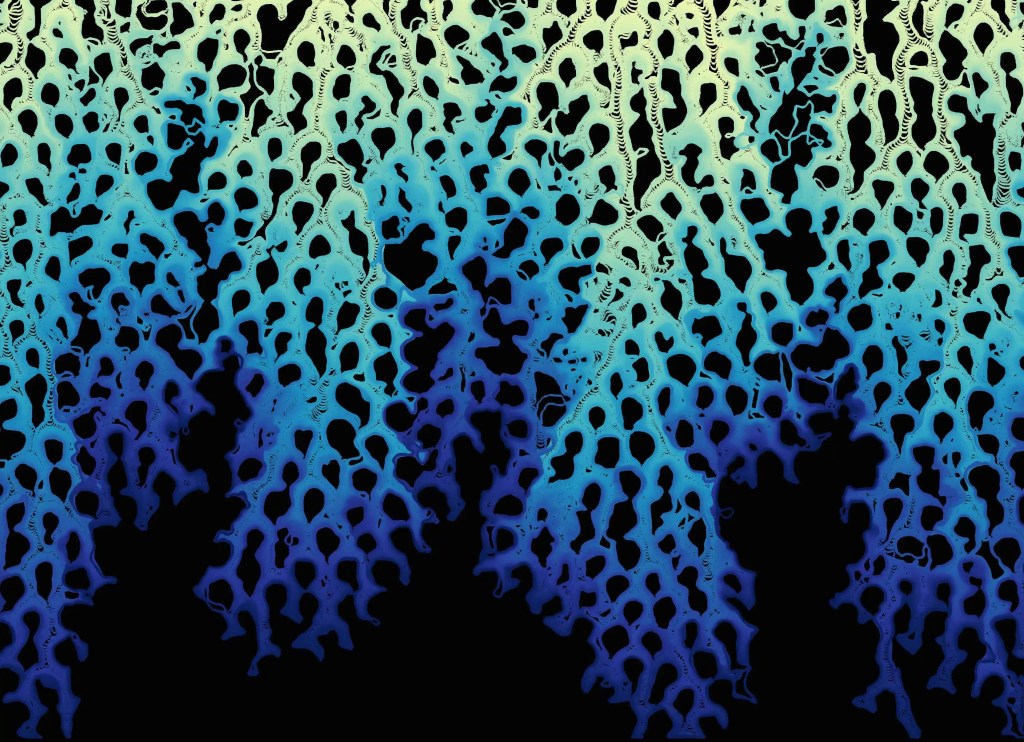
A major proportion of the carbon dioxide (CO2) emitted in the atmosphere is due to anthropogenic activities and represents one of the main causes of the global warming. A possible solution is represented by CO2 sequestration: CO2 is captured from power plants and injected in underground geological formations, where it dissolves into the resident fluid (brine) and can be safely stored for hundreds of years. In this frame, the properties of the rocks play a key role: after injection, CO2 follows sinuous paths among the rock grains and spreads in a complex manner, making predictions on the long-term dynamics hard to obtain. For this reason, the identification of suitable sequestration sites and the design of the injection process is still a challenging task. Moreover, injection of CO2 takes place at depths between 1 and 3 km beneath the earth surface, where accurate in-situ measurements are not possible: Simulations and lab-scale experiments become essential tools. This project, which focuses on the analysis of experiments and simulations of convection in porous media, aims at improving our understanding and design capabilities of CO2 storage processes in geological formations.
Research outputs
Papers
- Towards the understanding of convective dissolution in confined porous media: thin bead pack experiments, two-dimensional direct numerical simulations, and physical models, De Paoli M., Howland C.J., Verzicco R. and Lohse D., J. Fluid Mech., 987, A1 [link][pdf]
- Convective mixing in porous media: A review of Darcy, pore-scale and Hele-Shaw studies, De Paoli M., Eur. Phys. J. E 46:129 (2023), [link][pdf]. See also EPJ news and highlights.
- Experimental assessment of mixing layer scaling laws in Rayleigh-Taylor instability, De Paoli M., Perissutti D., Marchioli C. and Soldati A., Phys. Rev. Fluids, 7, 093503, (2022) [link][pdf]
Databases and datasets
- Experimental assessment of mixing layer scaling laws in Rayleigh-Taylor instability, De Paoli M., Perissutti D., Marchioli C. and Soldati A., Phys. Rev. Fluids, 7, 093503, (2022) [link]
Invited talks
- Convection-driven porous media flows: Implications for carbon dioxide sequestration, De Paoli M., Pre APS-DFD satellite meeting on Environmental and Biological Fluid Mechanics, University of Pennsylvania, Philadelphia (US), Nov. 16-17, 2023 [pdf].
- Convection driven porous media flows: Implications for carbon dioxide sequestration, De Paoli M., Invited talk at the PoreLab Lecture Series, Oslo (online), Nov. 14, 2023 [pdf, recording].
Courses
- 26th CISM-IUTAM Summer School on “Convection and deformation in porous media: Geophysical and biological flows“. Held at the International Center for Mechanical Sciences (CISM, Udine), July 11-15, 2022. Coordinated by Marco De Paoli and Prof. Christopher MacMinn (University of Oxford, UK). I gave four lectures on Dimensional Transition, dissolution in anisotropic and heterogeneous media, review on experimental and computational methods for porous media flows. Further details available here.
In the media
What happens to CO2 at the depths of kilometers? More insights into CCS, Press release by IR. W.R. Van Der Veen (University of Twente), May 6, 2022 [link].
Presentations and posters
- Rayleigh-Taylor instability in confined porous media: Pore-scale simulations and experiments. De Paoli M., Howland C., Verzicco R. and Lohse D., American Physical Society – Division of Fluid Dynamics, Washington (US), Nov. 19-21, 2023 [pdf].
- Convective mixing in confined porous media, De Paoli M., Howland C., Verzicco R. and Lohse D., JMBC Turbulence Contact Group Meeting, Delft (the Netherlands), Oct. 27, 2023 [pdf].
- Pore-scale simulation of convective mixing in confined media. De Paoli M., Howland C., Verzicco R. and Lohse D., 10th GACM Colloquium, Vienna (Austria), Sep. 10-13, 2023 [pdf].
- Experimental and numerical investigation on convective mixing in porous media flows. De Paoli M., Howland C., Verzicco R. and Lohse D., InterPore 2023, Edinburgh (Scotland), May 21-25, 2023 [pdf].
- Experimental assessment of mixing layer scaling laws in Rayleigh-Taylor instability. Perissutti D., De Paoli M., Marchioli C. and Soldati A., ERCOFTAC Spring Festival, Vienna (Austria), May 11-12, 2023 [pdf].
- Simulating Rayleigh-Taylor instability at the pore scale. Howland C., De Paoli M., Verzicco R. and Lohse D., NWO Physics, Velhoven (the Netherlands), April 4-5, 2023 [pdf].
- Experimental assessment of mixing layer scaling laws in Rayleigh-Taylor instability. De Paoli M., Perissutti D., Marchioli C. and Soldati A., American Physical Society – Division of Fluid Dynamics, Indianapolis (US), Nov. 20-22, 2022 [pdf].
- Large-scale flow structures in three-dimensional Rayleigh-Darcy convection. De Paoli M., Pirozzoli S., Zonta F. and Soldati A., Gordon Research Conference on Flow and Transport in permeable media, Les Diablerets (Switzerland), July 17-22, 2022 [pdf].
- Experimental investigation on Rayleigh-Taylor instability in confined porous media. Perissutti D., De Paoli M., Marchioli C. and Soldati A., Euromech Colloquium 619, Oberbeck–Boussinesq hypothesis and beyond in stratified turbulence, 2022, Vienna (Austria), (hybrid), July 4-8, 2022 [pdf].
- Three-dimensional Rayleigh–Darcy convection at high Rayleigh numbers. De Paoli M., Pirozzoli S., Zonta F. and Soldati A., Euromech Colloquium 619, Oberbeck–Boussinesq hypothesis and beyond in stratified turbulence, 2022, Vienna (Austria), (hybrid), July 4-8, 2022 [pdf].
- Three-dimensional Rayleigh–Darcy convection at high Rayleigh numbers. De Paoli M., Pirozzoli S., Zonta F. and Soldati A., Computational Methods in Water Resources 2022, Gdansk (Poland), (hybrid), June 19-23, 2022 [pdf].
- Influence of the reservoir properties on the dynamics of a migrating current of carbon dioxide. De Paoli M., Burgers Symposium 2022, Lunteren (the Netherlands), June 8 – 9, 2022 [pdf].
- Three-dimensional Rayleigh–Darcy convection at high Rayleigh numbers. De Paoli M., Zonta F., Pirozzoli S. and Soldati A., InterPore 2022, Abu Dhabi (UAE), (hybrid), May 30 – June 2, 2022 [pdf].
 Marco De Paoli